
Should I Buy Wide Shoes?
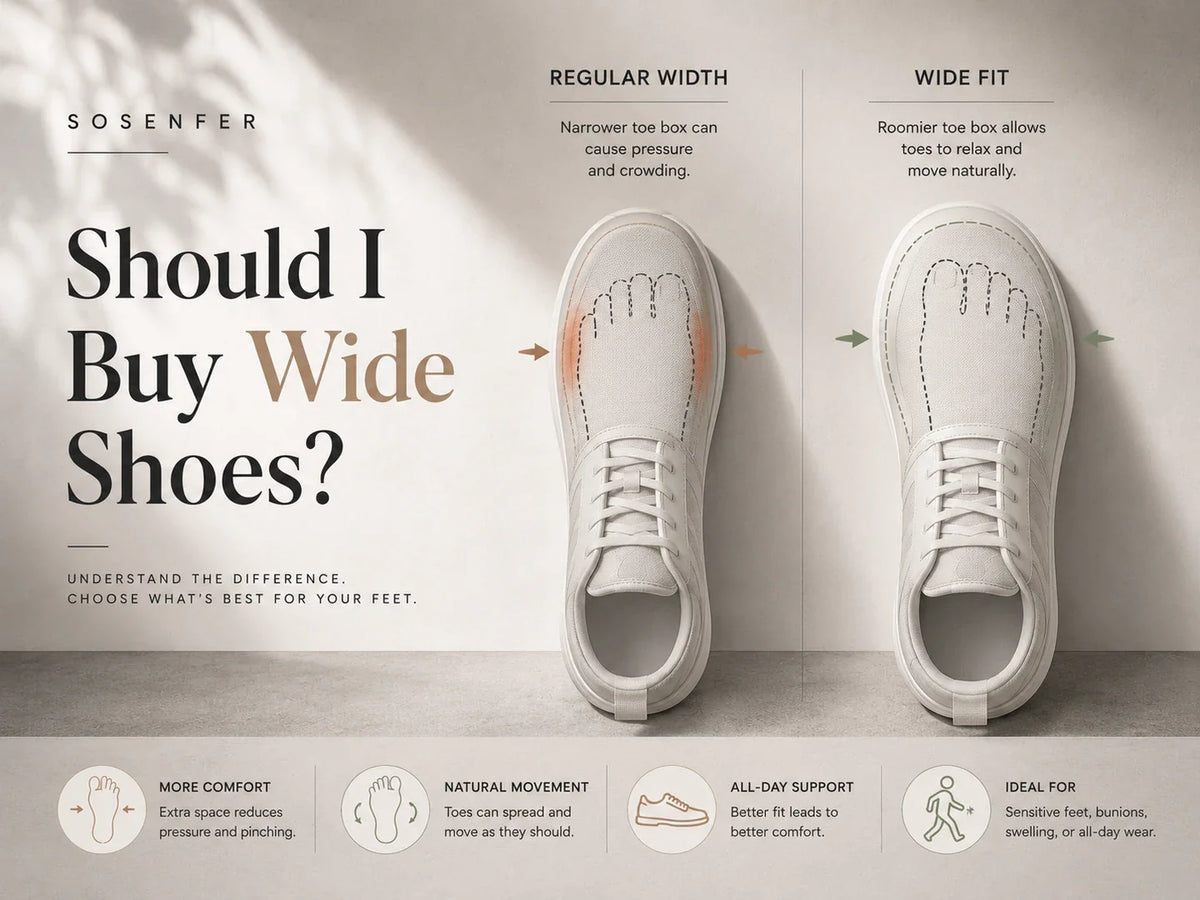
If your shoes often feel tight, your toes feel squeezed, or your feet feel tired after a long day, you may have wondered: should I buy wide shoes?
The answer depends on your foot shape, your daily routine, and how your current shoes feel when you walk, stand, work, or commute. Wide shoes are not only for people with visibly wide feet. They can also be helpful for anyone who needs more toe room, less side pressure, or a more natural fit throughout the day.
In this guide, we will explain what wide shoes are, how to know whether you may need them, and when to choose wide toe box shoes or Men’s 4E Wide Shoes.
Wide shoes are designed with extra room across the forefoot, toe box, and sometimes the midfoot. Compared with standard-width shoes, they allow the foot to sit more naturally inside the shoe instead of being pressed from the sides.
A good wide shoe should not feel loose everywhere. It should still hold your heel securely, support your steps, and feel stable when you walk.
The goal is not to buy a bigger shoe. The goal is to buy a shoe that better matches the shape of your foot.
Sosenfer Fit Note
The right wide shoe gives your toes and forefoot more space while keeping the heel and midfoot secure. If a shoe feels loose everywhere, it may not be the right shape for your foot.
You may want to consider wide shoes if you notice one or more of these signs:
One important thing to remember: your feet can change over time. Age, weight changes, pregnancy, long hours on your feet, and daily footwear habits can all affect how your shoes fit. A size that worked years ago may no longer be the most comfortable choice today.
Many people solve tight shoes by going up half a size or even a full size. Sometimes this helps, but it does not always solve the real problem.
If your shoe is too narrow, sizing up may give your toes a little extra space, but it can also make the shoe too long. That may cause your heel to slip, your foot to slide forward, or your steps to feel less stable.
Wide shoes solve the problem differently. They add more width where your foot needs space while keeping the length closer to your actual size. This can help create a more balanced fit.
| Problem | Better Starting Point | Why |
|---|---|---|
| Toes hit the front | Try a larger size | You may need more length. |
| Forefoot feels squeezed | Try wide shoes or wide toe box shoes | You may need more room across the front. |
| Whole shoe feels narrow | Try 4E wide shoes | You may need more overall width and volume. |
Your toes are meant to move, spread, and help you balance. When shoes are too narrow, your toes may be forced into an uncomfortable position. Over time, that pressure can make shoes feel restrictive, especially during long periods of standing or walking.
A roomy toe box gives your toes more space to rest naturally. This does not mean the shoe should feel oversized. It simply means the front of the shoe should not pinch, press, or restrict your toes.
For work shoes, walking shoes, and everyday shoes, toe room is especially important because your feet may feel fuller after hours of movement. A shoe that feels snug in the morning may feel tight by the afternoon.
Wide shoes may be a good option for people who:
For workers, comfort is not just about softness. A good work shoe should combine space, support, grip, and stability. If your work shoes feel narrow, heavy, or stiff around the toes, switching to a wide-fit design may make your day feel easier.
No. Wide shoes are not only for people with very wide feet.
Some people have a standard heel but a wider forefoot. Some people need extra room because their toes spread when they stand. Others may have swelling-prone feet or simply dislike the feeling of tapered shoes.
That is why fit matters more than the label. Instead of asking only, “Are my feet wide?” it may be better to ask, “Do my shoes give my feet enough room to move comfortably?”
A properly fitting wide shoe should feel comfortable from the first wear. It should not need a painful break-in period.
Here is what to check:
If the shoe feels loose in the heel but tight in the toes, the shape may not be right for your foot. If the shoe feels wide everywhere and unstable, you may need a different design rather than simply choosing a wider size.

These terms are related, but they do not always mean the same thing. Choosing the right one depends on where your foot needs more space.
| Shoe Type | What It Usually Means | Best For |
|---|---|---|
| Wide Shoes | More width across the shoe compared with standard fit. | People who need more room across the forefoot or midfoot. |
| Wide Toe Box Shoes | More natural space mainly in the toe and forefoot area. | Toe crowding, tapered shoes, forefoot pressure, and daily walking comfort. |
| Men’s 4E Wide Shoes | Extra-wide width with more overall room and volume. | Extra-wide feet, higher instep, swelling, or sizing up just to gain width. |
If your main issue is toe crowding, start with Sosenfer Wide Toe Box Shoes. If the entire shoe feels too narrow, Sosenfer Men’s 4E Wide Shoes may be the better fit.
When shopping for wide shoes, do not focus only on the word “wide.” Look at the full design.
| Feature | Why It Matters |
|---|---|
| Roomy Toe Box | Allows your toes to sit naturally without being pushed together. |
| Supportive Sole | Helps your foot feel more stable during walking and standing. |
| Secure Heel Fit | Prevents the shoe from slipping at the back. |
| Flexible but Stable Upper | Helps reduce pressure points without feeling loose. |
| Slip-Resistant Outsole for Work | Useful for work settings such as kitchens, warehouses, service jobs, and hard floors. |
| Lightweight Comfort | Helps the shoe feel easier to wear through long shifts or daily walking. |
If your job keeps you on your feet, wide work shoes may be worth considering.
Many work shoes are built for protection, but not all of them are built for foot shape. If your safety shoes or work shoes feel narrow, your toes may feel squeezed by the end of the day.
A wide toe box can help create a more comfortable fit, especially when combined with cushioning, support, and a stable outsole.
For people who work long shifts, small fit problems can become more noticeable over time. Shoes that feel “just a little tight” in the morning may feel uncomfortable after hours of standing, walking, lifting, or moving between work areas.
Always check your workplace requirements before buying work shoes. Some environments require safety toe protection, puncture resistance, waterproofing, slip resistance, or other job-specific features.
Sosenfer offers different wide-fit designs because not every foot needs the same kind of space. Here are two useful starting points:
Best for: toe crowding, forefoot pressure, tapered shoes, walking, work, travel, and daily comfort.
Choose wide toe box shoes if your main problem is that your toes feel squeezed, but you do not necessarily need the entire shoe to be extra wide.
Shop Wide Toe Box ShoesBest for: extra-wide feet, higher instep, swelling-prone feet, or shoes that feel narrow across the whole foot.
Choose 4E wide shoes if you need noticeably more overall width and volume instead of just extra toe room.
Shop Men’s 4E Wide ShoesWide shoes are helpful for many people, but they are not always the answer.
You may not need wide shoes if:
In some cases, discomfort comes from poor arch support, worn-out cushioning, a stiff sole, or the wrong shoe type for your activity. If you have ongoing pain, swelling, numbness, or a medical foot condition, it is best to speak with a qualified healthcare professional.
Sosenfer Wide-Fit Comfort
Explore wide toe box and 4E wide shoes designed to give your feet more space where they need it most, without choosing a shoe that is simply too long.
Shop Wide Toe Box ShoesYou should consider buying wide shoes if your current shoes feel tight across the toes, press against the sides of your feet, leave red marks, or become uncomfortable after long hours of wear.
Wide shoes can be especially useful if you have a wider forefoot, need more toe room, or spend much of the day standing and walking. However, the best shoe is not simply the widest shoe. It is the shoe that matches your foot shape, supports your steps, and feels comfortable throughout your day.
If you often find yourself asking whether your shoes are too narrow, your feet may already be giving you the answer.
Choose shoes that give your feet room to move, support where you need it, and comfort that lasts beyond the first few minutes of wear. Start with Sosenfer Wide Toe Box Shoes, or choose Men’s 4E Wide Shoes if you need extra-wide overall room.
You may need wide shoes if your toes feel squeezed, your feet feel pressure from the sides, your shoes leave red marks, or your shoes feel fine at first but tight after several hours.
Wide shoes can be more comfortable for standing all day if your current shoes feel narrow or restrictive. Look for wide shoes with cushioning, a secure heel, stable support, and an outsole suited to your environment.
If your shoe is too short, size up. If your shoe feels tight across the forefoot or toe area, choose a wider width or a wide toe box design. Sizing up may make the shoe longer, but it may not solve a width problem.
Not always. A wide toe box gives more space in the front of the shoe, while a wide-width shoe may also add room through the midfoot. Some people only need a roomy toe box, while others need a full wide or 4E fit.
Choose wide toe box shoes if your main issue is toe crowding or forefoot pressure. Choose 4E wide shoes if you need more overall width and volume through more of the shoe.
They may help if your work shoes feel tight around the toes or forefoot. For work environments, look for wide shoes with stable support, durable construction, and slip-resistant outsoles where appropriate.


