
Foot Problems Caused by Tight Shoes
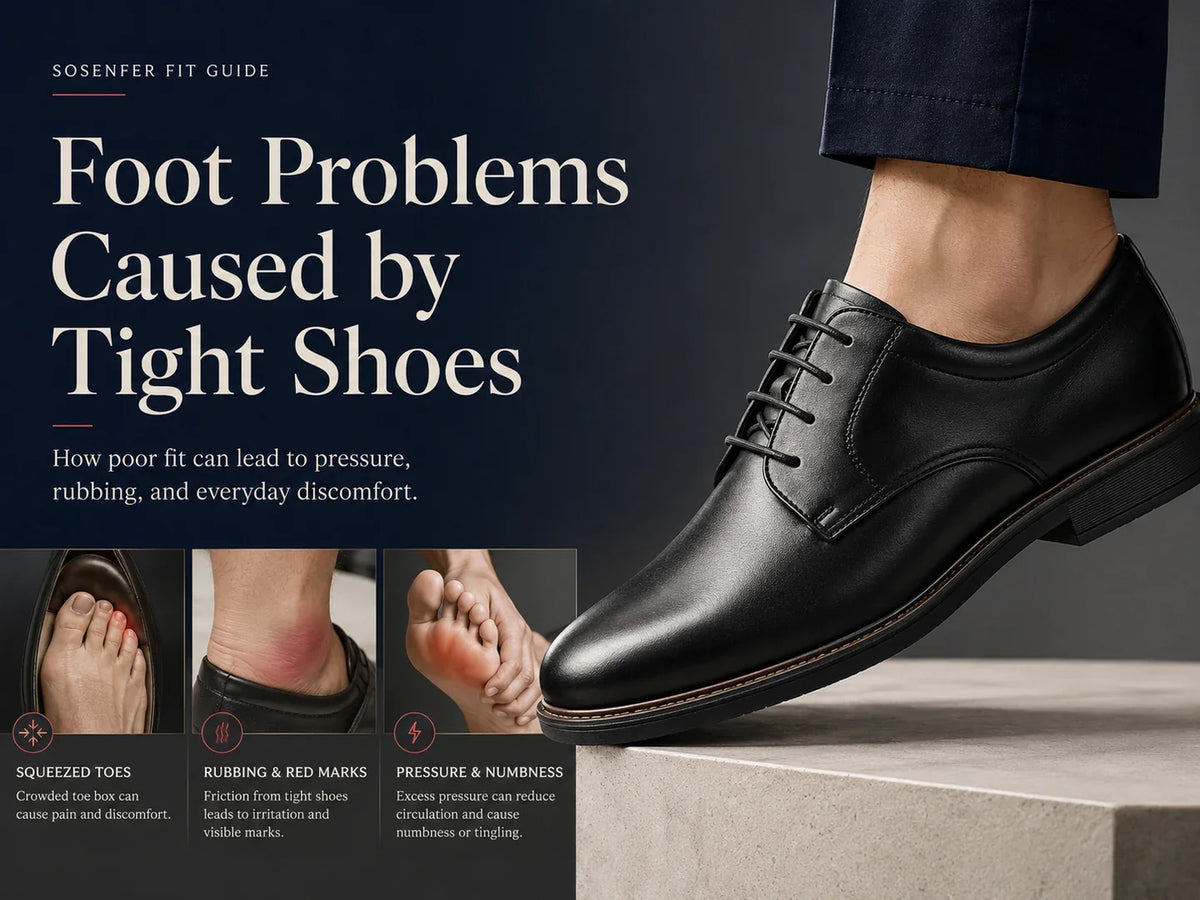
Many people think foot discomfort is simply part of a long workday, a busy shift, or getting older. But in many cases, the problem starts with something much simpler: shoes that are too tight.
When shoes squeeze the toes, press against the sides of the forefoot, or leave too little room for natural movement, your feet may feel restricted throughout the day. Over time, repeated pressure and friction can aggravate common foot problems and make daily walking or standing feel less comfortable.
This is why shoe fit matters. A shoe should feel secure, but it should not force your toes into a narrow shape. If your shoes fit in length but still feel tight across the front, a wide toe box shoe may be worth considering.
Sosenfer Fit Note
Shoes should hold your feet securely, but they should not squeeze your toes, press sharply against the sides, or leave red marks after regular wear. A better fit starts with enough space at the front of the shoe.
Tight shoes create pressure. That pressure may show up around the toes, the sides of the forefoot, the ball of the foot, or the toenails.
One tight day in shoes may only feel annoying. But repeated wear can make pressure points worse, especially for people who stand, walk, lift, work on hard floors, or wear structured work shoes for long hours.
The goal is not to choose shoes that feel loose everywhere. The goal is to choose shoes with the right length, enough forefoot width, stable heel hold, and enough toe room for natural movement.
A bunion is a bony bump that forms at the base of the big toe. As it develops, the big toe may begin to lean toward the second toe, creating pressure, swelling, and discomfort inside shoes.
Genetics and foot structure can play a role, but tight or narrow shoes may aggravate the area by forcing the toes together and placing more pressure on the joint.
For people who already have bunions, a narrow toe box may make every step feel more irritating because the shoe upper can rub directly against the enlarged joint.
Corns and calluses form when the skin thickens in response to repeated pressure or friction. Tight shoes can rub against the toes, sides of the foot, or ball of the foot, creating hard, uncomfortable patches of skin.
This is why shoe width matters. Even if the length feels right, a narrow toe box can still create friction across the toes and forefoot.
A wider, more comfortable shoe shape can help reduce unnecessary rubbing, especially when paired with a proper length and stable fit.

Hammertoe happens when a toe bends abnormally at the middle joint, making it curl instead of lying flat. Tight shoes can aggravate the condition by pressing on the bent toe.
When toes are repeatedly held in a cramped position, they may feel less comfortable during standing and walking. Corns may also develop where the bent toe rubs against the shoe.
If you already have toe discomfort or a visible toe deformity, choose shoes carefully and speak with a qualified medical professional if symptoms continue or worsen.
Shoes that press the toes together can increase pressure around the toenails. When the edge of a nail grows into the surrounding skin, it may cause redness, swelling, tenderness, or infection.
Tight toe areas can make this pressure feel worse, especially if the shoes also push the toenails against the front or sides of the shoe.
If you notice swelling, infection, bleeding, or ongoing pain around a toenail, seek medical advice instead of relying on footwear changes alone.

A narrow toe box does more than feel uncomfortable. It can change how pressure is distributed across the front of the foot.
The forefoot is one of the main areas that absorbs pressure when you walk, stand, climb, or shift weight during work. When the toes cannot sit naturally, pressure may feel concentrated in smaller areas instead of spreading more comfortably.
This is one reason many people prefer wide toe box shoes for long shifts, walking, commuting, and daily movement.
Tight shoes can create repeated rubbing, especially around the heel, toes, and sides of the foot. This friction may lead to blisters, redness, and sore spots.
A good shoe should hold the foot securely without squeezing it. For work shoes, walking shoes, or everyday footwear, this balance is important: secure enough for stability, roomy enough for comfort.
If a shoe needs a painful break-in period, feels hot and tight after a short walk, or leaves visible pressure marks, the fit may not be right for your foot shape.

Your shoes may be too tight if:
A shoe should feel comfortable when you put it on. It should not require a painful break-in period to become wearable.

When choosing shoes for long hours of standing, walking, or working, look for a fit that gives your toes space without making the whole shoe feel loose.
| Feature | Why It Matters |
|---|---|
| Roomy Toe Box | Gives the toes more space instead of pressing them together. |
| Forefoot Width | Helps reduce side pressure around the ball of the foot. |
| Supportive Cushioning | Makes long standing and walking feel less harsh. |
| Stable Outsole | Helps the shoe feel dependable during everyday movement. |
| Breathable Materials | Helps reduce the heavy, overheated feeling during long wear. |
| Secure Heel and Midfoot | Keeps the shoe from feeling sloppy even with more toe room. |
Wide toe box shoes are designed to give the front of the foot more space, helping reduce unnecessary pressure on the toes and forefoot.

At Sosenfer, we design functional footwear around a simple idea: your feet should not have to fight your shoes.
Our wide toe box work shoes and everyday functional shoes are built to give the toes more natural room, helping reduce the cramped feeling often caused by narrow footwear.
For people who spend long hours on their feet, this extra front-foot space can make a meaningful difference in daily comfort.
With features such as roomy forefoot design, stable outsoles, protective construction, and comfort-focused support, Sosenfer shoes are made for workers, walkers, commuters, and anyone who needs practical comfort throughout the day.

Sosenfer Wide Toe Box Shoes
Explore shoes designed with extra forefoot room, stable support, and practical comfort for work, walking, travel, and long days on your feet.
Shop Wide Toe Box ShoesNot every foot needs the same kind of space. Some people mainly need more room around the toes, while others need extra width through more of the shoe.
| Choose This | If Your Main Problem Is | Good For |
|---|---|---|
| Wide Toe Box Shoes | Toe crowding, tapered shoes, or pressure around the forefoot. | Walking, work, travel, daily movement, and long standing. |
| Men’s 4E Wide Shoes | You need noticeably more overall width and volume. | Extra-wide feet, higher instep, swelling, or sizing up just to get width. |
If regular shoes mainly squeeze your toes, start with wide toe box shoes. If the entire shoe feels too narrow, Men’s 4E Wide Shoes may be the better place to start.
Tight shoes may seem like a small problem, but over time they can aggravate common issues such as bunions, corns, calluses, hammertoes, ingrown toenails, blisters, and forefoot pressure.
Choosing shoes with a better fit is one of the simplest ways to support everyday foot comfort. Your toes need room to move, your forefoot needs space to spread, and your shoes should work with your feet — not against them.
If you often feel pressure, rubbing, or pain in your current shoes, it may be time to try footwear with a wider, more natural fit. Persistent pain, visible deformity, numbness, infection, or worsening symptoms should be discussed with a qualified medical professional.
For a more comfortable starting point, explore Sosenfer Wide Toe Box Shoes and find a pair designed with more room where your feet need it most.
Tight shoes can contribute to pressure, rubbing, and toe crowding, which may aggravate common foot problems such as corns, calluses, bunions, hammertoes, blisters, and toenail pressure. They are not the only cause, but poor fit can make discomfort worse.
Your shoes may be too tight if your toes feel squeezed, your pinky toe rubs, you see red marks, your feet feel numb or hot, your toenails press against the front, or you feel relief immediately after taking the shoes off.
Often, yes. Sizing up adds length, which may cause heel slipping. Wide toe box shoes are designed to add more room at the front of the shoe without making the whole shoe unnecessarily long.
No. Wide toe box shoes can also help people with average-width feet who dislike toe crowding or tapered shoe shapes.
Choose wide toe box shoes if your main issue is toe crowding or forefoot pressure. Choose 4E wide shoes if you need more overall width and volume through more of the shoe.
You can explore the collection here: Sosenfer Wide Toe Box Shoes.


