
Best Work Shoes for Wide Feet and High Insteps: What to Look For
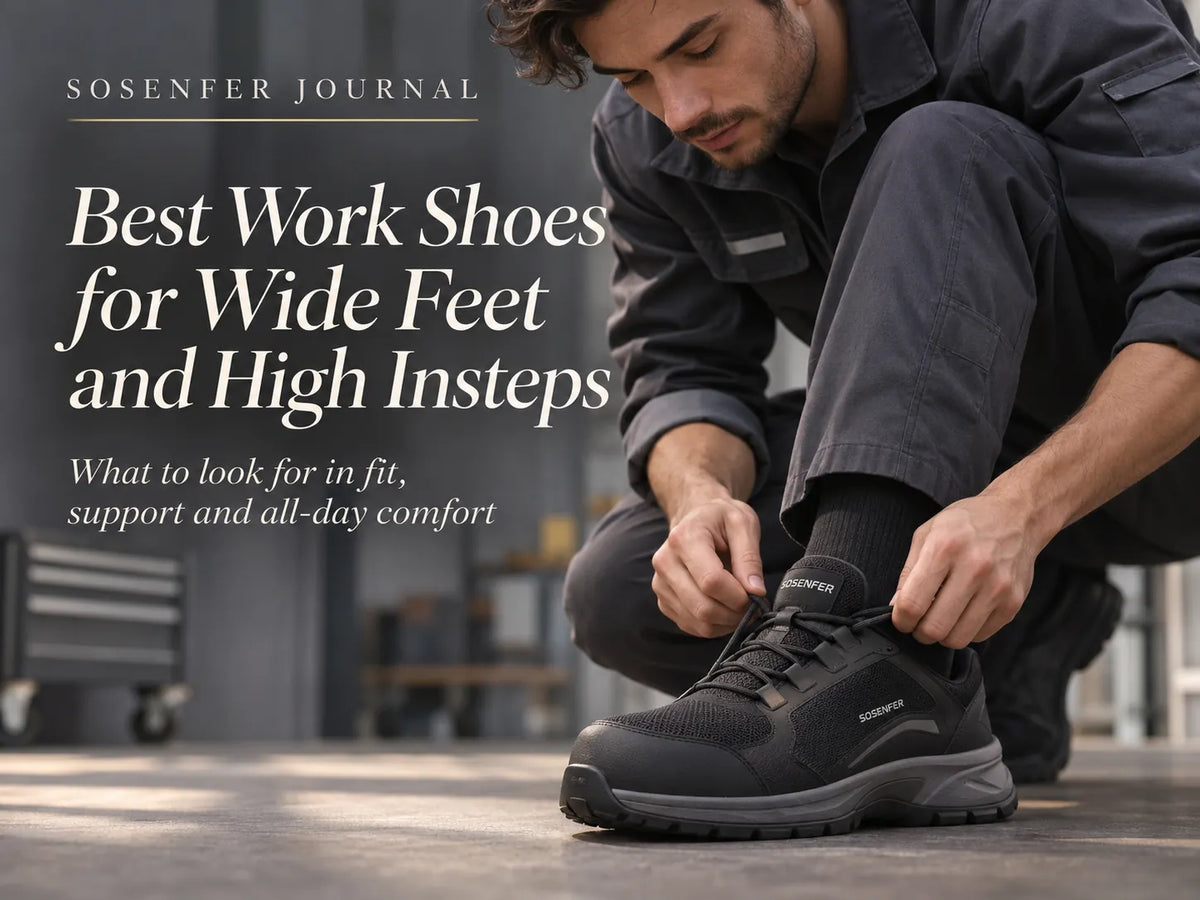
SOSENFER JOURNAL · WORK FOOTWEAR GUIDE
Wide feet and high insteps create a different kind of footwear challenge. A shoe may have enough room across the toes but still feel painfully tight across the top of your foot. Learn what to look for in work shoes, how to find the right fit, and which features make long shifts easier.
Finding work shoes for wide feet is already difficult. Finding a pair that also accommodates a high instep can be even more frustrating.
You might find a shoe with a roomy toe box, only to discover that the upper presses against the top of your foot. Or perhaps a wider size solves the side-to-side pressure but makes the heel feel too loose.
This happens because foot width and instep height are two different fit measurements.
Your foot needs enough space across the forefoot, but it also needs enough vertical room through the middle of the shoe. When either dimension is too restrictive, a work shoe can become uncomfortable during standing, walking, bending and repeated movement.
The right pair should do more than simply feel wide. It should provide enough overall volume, an adaptable upper, a secure heel and the protection your workplace requires.
The best work shoes for wide feet and high insteps should combine a spacious forefoot with sufficient upper volume. Prioritize:
If your instep is particularly high, an adjustable upper is often more useful than simply choosing a longer shoe.
Before choosing work shoes, it helps to understand exactly where your foot needs more room.
Foot width describes how much space your foot needs from side to side. Instep height describes the vertical height of the upper-middle portion of your foot, beneath the laces and shoe opening.
These measurements affect different parts of a shoe. A wider toe box may solve toe crowding, but it does not automatically provide more space above the instep.
01 · FOOT WIDTH
Your forefoot and toes need enough horizontal room without being pushed together by the sides of the shoe.
Look for: Wide / 2E / 4E options and a roomy toe box.
02 · INSTEP HEIGHT
The top of your foot needs enough clearance beneath the shoe's upper, tongue and lacing area.
Look for: Adjustable lacing, flexible uppers and a deeper fit.
Absolutely. Some people need additional room in both directions. They may experience pressure along the sides of their feet and a separate feeling of tightness across the top.
This is why buying a standard shoe in a larger length is not always the answer. A longer shoe does not necessarily have the correct width or upper volume.
The better approach is to evaluate the entire fit: toe box, forefoot width, instep clearance, midfoot adjustment and heel security.
Not every uncomfortable shoe is too short. The location of the pressure can tell you more about what needs to change.
| What You Feel | Possible Fit Problem | What to Check |
|---|---|---|
| Toes feel squeezed | Narrow toe box | Forefoot shape and width |
| Pressure on top of foot | Insufficient upper volume | Instep clearance and lacing |
| Sides feel compressed | Insufficient forefoot width | Wide / extra-wide sizing |
| Heel slips after sizing up | Excess shoe length or volume | Length and heel lockdown |
| Shoe is difficult to put on | Restricted opening or upper | Entry design and adjustable closure |
Pay particular attention to pressure that develops after several hours. Feet can change in volume during the day, especially after extended standing and walking.
If a shoe creates persistent pressure, numbness or pain, do not assume it simply needs breaking in. Reassess the fit and choose a different construction if necessary.
The toe box should follow the natural shape of your forefoot instead of narrowing sharply toward the toes.
A wider, more anatomical front gives the toes additional space to sit naturally. This is especially important when your job involves standing, walking, climbing or repeatedly changing positions.
This is one of the most overlooked features.
A shoe can have a wide sole but a low-profile upper that presses directly against the top of your foot. Look for an upper with sufficient depth and an opening that does not force your instep into a restricted space.
The shoe should close comfortably without requiring excessive force on the laces or straps.
If you have a high instep, adjustable lacing can make a significant difference.
You can loosen the sections that cross the top of your foot while keeping the heel and lower midfoot reasonably secure. This creates a more adaptable fit than relying on a fixed, non-adjustable opening.
Dual-lacing systems and adjustable closures are worth considering when the top of your foot is usually the first place to feel pressure.
The upper should accommodate natural foot movement without creating unnecessary pressure.
Breathable mesh, flexible knit and adaptable synthetic materials can offer different levels of flexibility. However, material flexibility alone does not guarantee enough instep volume. The overall shoe shape still matters.
A common mistake is choosing a much longer shoe to make the forefoot feel wider.
The extra length can cause your heel to move around and your foot to slide forward. This may create additional friction and instability during long shifts.
Look for a shoe that provides more room where you need it while maintaining a controlled fit around the heel.
Warehouse floors, restaurant kitchens, workshops and concrete workspaces can put repeated impact through your feet.
A cushioned insole and a well-designed midsole can help soften the feeling of repeated steps. Consider the thickness, stability and feel of the cushioning rather than choosing a shoe based only on how soft it feels when you first try it on.
Comfort is important, but work footwear must also match the hazards of your job.
Depending on your environment, you may need a protective toe, puncture-resistant construction, slip-resistant traction or other specific safety features.
Always verify the actual protection specifications and applicable certification of the individual shoe. A wide toe box or comfortable upper does not automatically make a shoe suitable for every industrial workplace.
Getting the right size requires more than checking your usual shoe number. Measure your feet and consider the socks you wear during work.
Measure the length and width of both feet while standing. Use the larger measurement as your starting point.
Thicker socks take up more internal space. Measure and try shoes with the type of socks you actually wear during your shift.
Put the shoe on and check whether the upper presses against the top of your foot. If the laces are already loose but the instep still feels restricted, the shoe may not have enough vertical volume.
Do not evaluate the fit only while sitting. Walk, stand and bend your feet naturally. Check for pressure across the forefoot, rubbing around the heel and contact against the instep.
If you use custom orthotics or thicker insoles, check whether the shoe has a removable footbed and whether the replacement fits securely. Do not remove a footbed if doing so compromises the intended fit or safety construction.
A larger size increases shoe length and may not solve insufficient width or instep volume. Start with the correct length, then look for the appropriate width and upper construction.
For a deeper explanation of sizing and toe-box fit, explore our Best Wide Toe Box Work Shoes for Long Shifts guide.
Different feet need different types of room. Some workers mainly need extra space around the toes, while others need more flexibility across the upper.
Sosenfer offers several work-ready styles with different combinations of forefoot width, closure design and protective features. Here are three options worth comparing.
| Model | Main Fit Advantage | Entry System | Best Starting Point |
|---|---|---|---|
| FlexGuard | Wide forefoot + adjustable upper | Dual-lacing | Wide feet and high insteps |
| GlideFree | Wide toe box + adjustable laces | Lace-up / hands-free entry | Non-safety work environments |
| ApexWide | Roomy protective toe area | Elastic-gore slip-on | Toe crowding and safety protection |
The most important distinction is how much control you need over the upper. If instep pressure is your main issue, start by comparing adjustable-lacing models. If toe crowding is the bigger problem, focus on the shape and internal space around the protective toe.
Explore the complete Sosenfer Wide Toe Safety Shoe Collection to compare more work-ready styles.
The right shoe also depends on what your job requires. A comfortable shoe for a warehouse is not automatically the right choice for a commercial kitchen or construction site.
If your job involves handling equipment, moving materials or working around potential impact and puncture hazards, prioritize the protective features required by your workplace.
FlexGuard and ApexWide are worth comparing when you need a wide-fit safety shoe with a protective toe. Check the exact model specifications against your workplace requirements.
Kitchen floors can become wet or oily. Look for an appropriate slip-resistant outsole, an easy-to-clean upper and enough room for your feet to remain comfortable throughout a long shift.
GlideFree is worth considering when your role does not require a protective toe. If your employer requires certified protective footwear, choose a model that meets those specifications.
Jobs involving frequent walking and standing benefit from a comfortable insole, a secure heel and an upper that does not restrict the instep.
For these environments, prioritize a fit that remains comfortable with your usual work socks and allows natural movement throughout the shift.
Construction environments can require protective toes, puncture-resistant components and specific outsole performance. Do not choose footwear based on comfort or appearance alone.
Confirm the required safety standard before purchasing. A product's protective features must match the hazards and regulations of the job.
SOSENFER JOURNAL · RELATED GUIDES
Best Slip-On Work Shoes for Wide Feet
Compare easy-entry work shoes and wider forefoot options.
Best Hands-Free Shoes for Wide Feet
Find hands-free designs that balance easy entry and a roomy fit.
Wide Safety Shoe vs. Wide Safety Toe: What's the Difference?
Understand why a roomy toe cap and a wide shoe are not the same thing.
Best Wide Toe Box Work Shoes for Long Shifts
Learn how forefoot shape affects everyday work comfort.
Look for work shoes that combine a wide forefoot with sufficient upper volume and adjustable lacing. Sosenfer FlexGuard Black Wide Pro is a useful model to compare because it offers a Wide / 2E fit and an adjustable dual-lacing system.
No. Wide sizing mainly addresses horizontal space. High insteps need additional vertical room through the upper and instep area. A shoe can be wide but still feel tight across the top of your foot.
2E describes a width category, not a guaranteed instep height. Whether it fits depends on the shoe's last, upper volume, materials and closure system. Always evaluate the complete fit.
4E is a wider sizing category in many men's footwear systems. It can be useful for people who need more horizontal room than a 2E shoe provides. However, 4E does not automatically mean more vertical instep clearance.
Shoes with adjustable lacing, a flexible upper and sufficient instep volume are often worth prioritizing. They allow more control over how the shoe closes across the top of the foot.
Not automatically. A longer shoe may cause heel slipping and unnecessary movement. First check whether the shoe has enough upper volume and whether the closure can be adjusted comfortably.
Some are, but it depends on the opening, upper flexibility and overall shoe volume. Elastic-gore slip-ons may be convenient, but they usually provide less individual adjustment than lace-up models.
They can be, provided the shoe combines a protective toe with sufficient room inside the forefoot. The outer width of a shoe does not always reflect the usable space inside its protective toe area.
Look for a roomy forefoot, suitable cushioning, secure heel fit and an outsole appropriate for your workplace. The right combination depends on your work surface, movement and required protective features.
The upper should not create uncomfortable pressure across the top of your foot. You should be able to secure the shoe without overtightening the closure. Test the fit while standing and walking in your normal work socks.
SOSENFER · BUILT FOR REAL FEET
Wide feet and high insteps need more than a bigger shoe size. They need the right combination of forefoot space, upper volume, adjustable fit and work-ready performance.
Explore Sosenfer's wide-fit work shoes and compare different constructions to find a pair that works with your feet and your daily routine.
SHOP WIDE-FIT WORK SHOES →SOSENFER — BUILT FOR REAL FEET.
MORE ROOM · BETTER FIT · EVERYDAY MOVEMENT


