
Why Safety Sneakers Make Sense for Warehouse Work
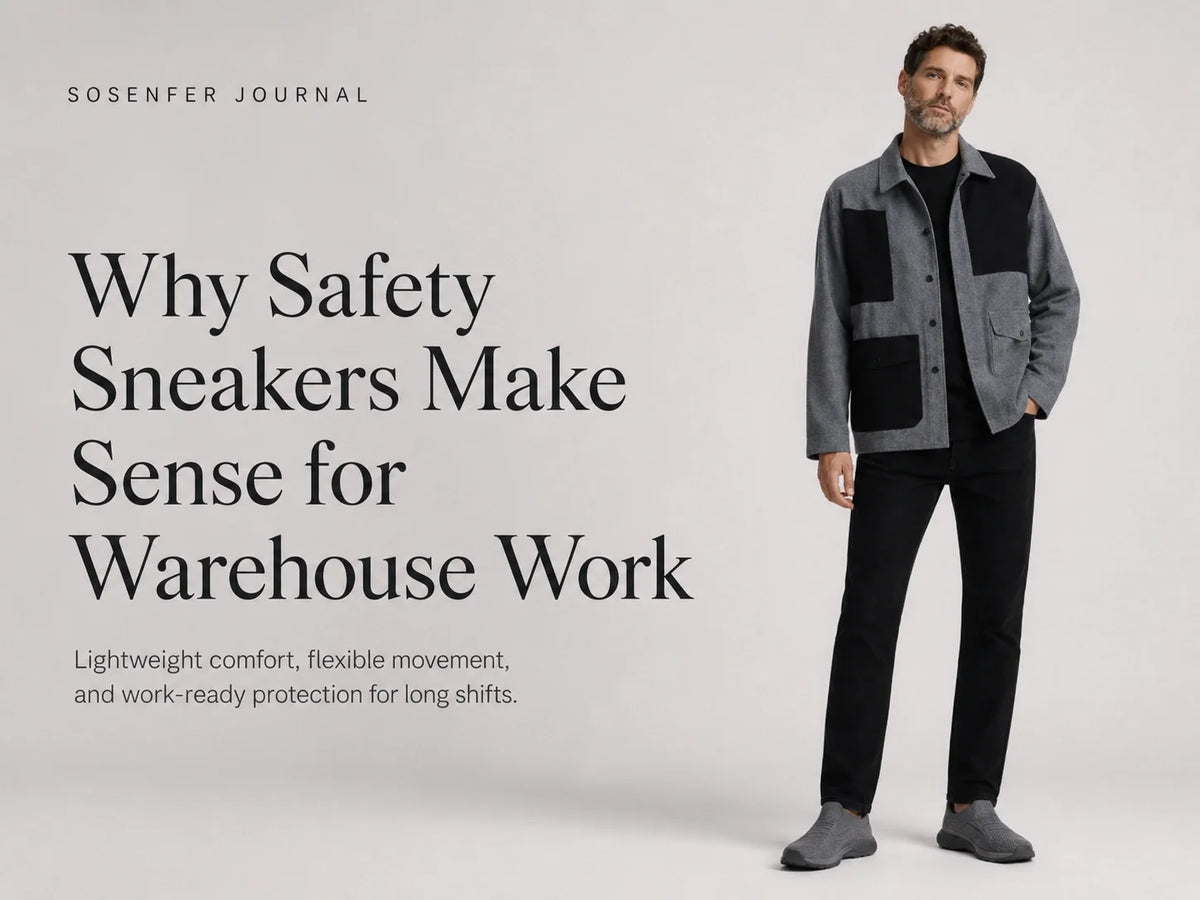
Warehouse work is unusually demanding on footwear. A single shift can involve long walks on concrete, repeated stops and turns, standing at a packing station, pushing carts, climbing steps, crouching, lifting, and moving between dry and occasionally slippery surfaces.
That is why safety sneakers can make sense for many warehouse roles. They can combine job-appropriate protective features with a lighter, lower-profile construction that feels closer to an athletic shoe than a traditional work boot.
For the right warehouse job, a lightweight safety sneaker can provide protective-toe options, traction, cushioning, flexibility, and a roomier fit without carrying unnecessary boot-like bulk through every step of the shift.
The key limitation is important: “safety sneaker” describes the style, not a universal protection level. Your employer’s hazard assessment and the specifications of the individual shoe still come first.
QUICK ANSWER
Warehouse jobs are rarely just “standing jobs” or “walking jobs.” A picker may cover long aisles and stop hundreds of times. A packer may stand for extended periods and then move repeatedly between tables, conveyors, and pallets. A shipping worker may transition between polished indoor floors, ramps, loading areas, and dock zones.
| Warehouse Task | Useful Footwear Characteristics |
|---|---|
| Long aisle walking | Low unnecessary weight, cushioning, flexible forefoot |
| Standing at stations | Stable support and balanced cushioning |
| Frequent turning | Secure heel fit and suitable traction |
| Crouching and lifting | Enough flexibility to bend naturally |
| Loading zones | Job-appropriate protection and outsole grip |
Traditional work boots may use a tall shaft, thick outsole, dense upper, hardware, and multiple reinforced layers. Those features can be appropriate when the job requires them. But in many indoor warehouse roles, some of that structure may be unnecessary.
A low-cut safety sneaker removes the tall shaft and can use lighter mesh, textile, EVA, or athletic-style construction. For workers who spend much of the shift walking, less unnecessary bulk can make the shoe feel easier to move in.
This also connects with footwear weight. A small weight difference may look unimportant on a product page, but that weight moves with the foot step after step. Read our guide: Does 100 Grams Matter in a Safety Shoe?
Warehouse movement involves more than walking forward. Workers pivot, reach, crouch, push, pull, step sideways, and repeatedly change direction.
A flexible safety sneaker can bend more naturally through the forefoot than a very rigid boot. That does not automatically make it safer or more supportive, but it can reduce the restrictive feeling of footwear that is stiffer than the job requires.
Warehouse flooring is often hard and unforgiving. That makes the midsole and insole more important to how the shoe feels during repeated steps and long periods of standing.
Recent occupational-footwear research shows that sole and insole characteristics affect perceived comfort during prolonged standing. The findings also show a tradeoff: softer soles can help with impact and walking comfort, while firmer structures may provide greater standing stability.
For a job that mixes walking and standing, the goal is not the softest shoe possible. It is balanced cushioning with a stable platform.
Warehouse workers can build up heat quickly during repetitive movement. Mesh and textile safety sneakers can provide more airflow than heavily built leather footwear.
That makes breathable construction useful for active indoor roles. However, mesh is not the right answer when the job requires waterproofing, chemical resistance, welding protection, or another specialized upper.
Protective toe caps are rigid. If the shoe narrows aggressively toward the front, the toes can feel crowded against a structure that does not stretch.
A roomier forefoot gives the toes more space while the heel and midfoot can remain secure. A wide toe box therefore does not have to mean an oversized or sloppy fit.
Sosenfer’s Wide Toe Box Safety Shoes are designed around this idea: more usable forefoot room without turning the entire shoe into a loose fit.
Warehouse floors can be affected by water, dust, oils, packaging debris, or transitions between different surface materials. Traction is therefore more important than outsole appearance alone.
NIOSH identifies slip-resistant footwear as one part of workplace fall prevention. In a large randomized field trial involving food-service workers, providing highly rated slip-resistant shoes reduced slipping-related workers’ compensation claims by 67%.
That study was not conducted in warehouses, so the exact percentage should not be transferred to warehouse operations. It does provide strong real-world evidence that properly selected slip-resistant footwear can materially affect slip injuries in workplaces where contaminated floors are a concern.
A slip-resistant outsole does not stay new forever. NIOSH-supported research has found that footwear traction declines as tread wears and the worn area becomes larger.
Inspect your work shoes regularly. Replace them when tread is heavily worn, the outsole separates, the upper is damaged, cushioning is collapsed, or protective components have been compromised.
| Feature | Safety Sneakers | Traditional Work Boots |
|---|---|---|
| Typical feel | Lower, lighter, more athletic | More substantial and structured |
| Forefoot flexibility | Often higher | Often firmer |
| Ankle coverage | Low | Usually higher |
| Breathability | Often high with mesh uppers | Varies by construction |
| Best fit | Active indoor work when protection matches the job | Jobs needing greater coverage or specialized rugged protection |
If your employer requires a certain boot height, metatarsal guard, waterproof construction, chemical resistance, electrical protection, or another specialized feature, a safety sneaker may not be sufficient.
WAREHOUSE FIT PRINCIPLE
The right warehouse safety sneaker is not simply the lightest or softest shoe. It is the shoe that matches the hazard, controls the foot securely, provides useful traction, and removes unnecessary structure from a job built around continuous movement.
Sosenfer’s current safety range emphasizes roomier toe shapes, cushioned support, and lighter sneaker-style construction across multiple work models. Protective features vary, so compare each product with your workplace requirements.
LIGHTWEIGHT WORK SNEAKER
SafeLite uses a breathable mesh upper, wide-fit forefoot, memory-foam footbed, cushioned EVA midsole, slip-resistant rubber outsole, and a lightweight safety-shoe construction. Sosenfer positions it for warehouse, light-industrial, standing, and daily utility use.
View SafeLite Safety ShoesCOMPOSITE-TOE OPTION
FlexGuard Pro combines a lightweight composite safety toe with breathable mesh, cushioning, flexible construction, and a high-traction outsole in a low-profile work-sneaker format.
View FlexGuard ProWIDE TOE + SLIP-ON
ApexWide combines a composite protective toe with a true wide toe box and lightweight slip-on construction for workers who prioritize forefoot room and a less bulky feel.
View ApexWide GrayCompare more steel-toe, composite-toe, wide-toe, rotary-fit, slip-on, and puncture-resistant options in the Sosenfer Safety Shoes collection.
A safety sneaker is not a replacement for every work boot. Choose another footwear category when your work requires greater ankle or lower-leg coverage, waterproofing, metatarsal protection, specialized chemical or thermal protection, specific electrical protection, welding protection, or another feature the sneaker does not provide.
Choose from the hazard outward—not from the style inward.
BUILT FOR REAL WAREHOUSE MOVEMENT
For the right warehouse role, lightweight safety sneakers can bring protective footwear closer to the way modern workers actually move—walking, turning, standing, lifting, and repeating it all day.
Explore Sosenfer Safety ShoesSafety sneakers make sense for many warehouse jobs because they combine a lower-profile, more flexible format with the protective features required by modern work footwear.
For active indoor roles, a lightweight design can reduce unnecessary bulk while a wide forefoot, balanced cushioning, breathable upper, and suitable outsole improve how the shoe handles long periods of movement on hard floors.
They are not automatically better than work boots. The right choice always begins with the hazards and PPE requirements of the job.
Once protection is confirmed, choose the lighter, roomier, more flexible shoe that best matches the way your warehouse shift actually moves.
Yes, when their protective features match the job. Their lower weight and flexible construction can be especially useful for warehouse roles involving frequent walking and standing.
Not every warehouse role has identical requirements. The correct protective footwear depends on workplace hazards and employer requirements.
They can be. Composite-toe safety sneakers are often selected by workers looking for a lighter protective-toe format. Check the exact product specifications before ordering.
They often are because they remove the tall shaft and may use lighter athletic-style uppers and midsoles. Actual weight still varies by model and size.
Look for a secure fit, balanced cushioning, stable support, suitable traction, and low unnecessary weight. If safety footwear is required, these comfort features must be combined with the proper workplace protection.
Traction matters wherever slippery surfaces can occur. Slip-resistant footwear is one component of workplace fall prevention, but housekeeping, floor maintenance, and other controls remain important too.
They can be more comfortable for workers who feel crowded inside narrow safety footwear. The heel and midfoot should still fit securely.
Not necessarily. Weight and protection are separate characteristics. Evaluate the actual protective specification of each model rather than judging safety by weight alone.
There is no single interval for every worker. Replace shoes when tread, cushioning, uppers, soles, or protective components are excessively worn or damaged.
Use safety sneakers for mobile indoor work when their specifications are sufficient. Choose boots when the job requires greater coverage, weather resistance, or specialized protection.


