
Vad betyder EE i skostorlek? Vad betyder D i skostorlek?
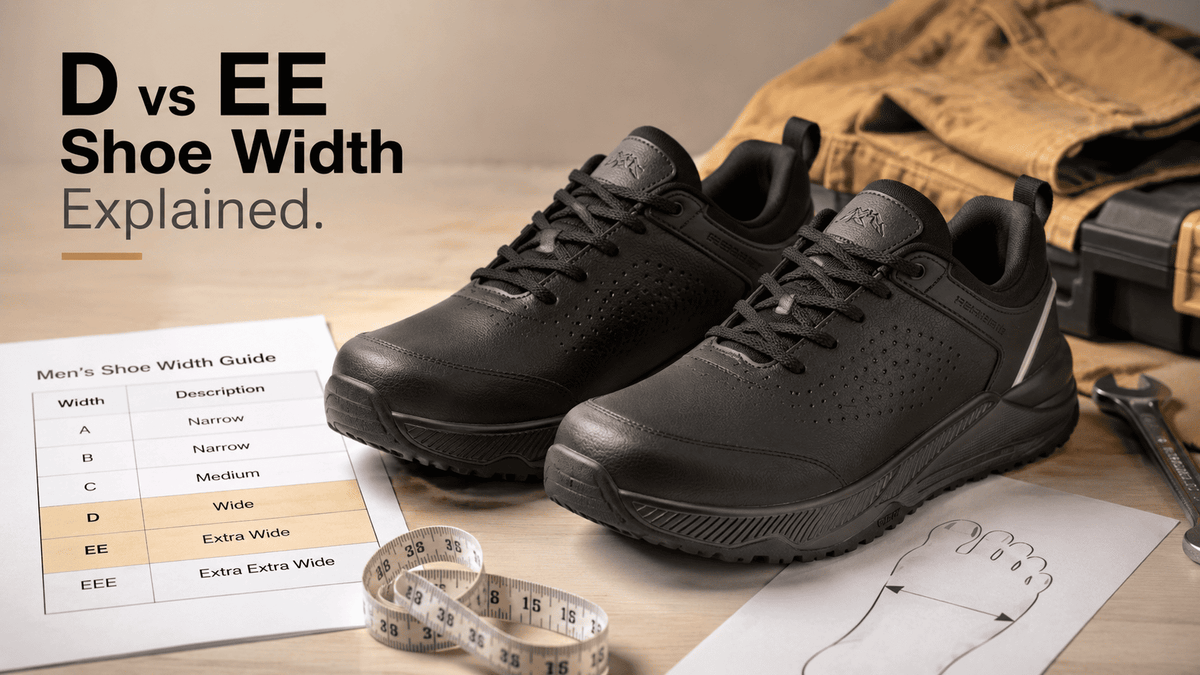
När man köper skor börjar de flesta med längden: storlek 40, storlek 41, storlek 42 och så vidare. Men två skor med samma längd kan kännas helt olika när deras bredder, tåformer och inre volymer inte är desamma.
Om du har sett etiketter som D, EE, 2E eller 4E bredvid en skostorlek, beskriver dessa bokstäver vanligtvis en breddkategori. De kan hjälpa dig att jämföra standard-, breda och extra breda alternativ – men bara om du förstår hur systemet används.
I många herrsystem är D en standard- eller medelbredd, medan EE – även skrivet som 2E – är en bred bredd. I många damsystem är D bred och 2E är extra bred.
Dessa etiketter är användbara utgångspunkter, inte universella mått. Bredden kan variera mellan märken, läster, produktkategorier, material och även två modeller med samma breddbeteckning.
Den här guiden förklarar D kontra EE skobredd, hur breddbeteckningar skiljer sig mellan herr- och damskor, hur du ser om dina skor är för smala och varför en bred tåbox inte alltid är detsamma som en 2E-sko.
Snabbt svar
För herrskor betyder D vanligtvis medium eller standardbredd. EE eller 2E betyder vanligtvis bred bredd. En storlek 42 EE är därför generellt sett bredare än en storlek 42 D samtidigt som längden förblir ungefär densamma.
För damskor representerar B vanligtvis standardbredd, D representerar vanligtvis bred bredd, och EE eller 2E representerar vanligtvis extra bred bredd.
Kontrollera alltid det enskilda varumärkets breddtabell. Breddbokstäver garanterar inte att varje sko med samma etikett har samma tåform, volym eller passform.
Herr D
Vanligtvis Standard
Ofta standardalternativet för medelbredd i herrskor.
Herr EE / 2E
Vanligtvis Bred
Ger mer bredd än en herr D i samma modell och längd.
Herr 4E
Vanligtvis Extra Bred
Avsedd för fötter som kräver mer utrymme än en typisk 2E-passform.
I den här guiden:
Vad D betyder · Vad EE betyder · D vs EE · Breddtabell · Tecken på att du behöver breda skor · EE vs bred tåbox · Hur breda skor passar · FAQ

I många herrsystem representerar D en standard- eller medelbredd. En herrstorlek 42 D behandlas därför vanligtvis som en sko med normal längd och normal bredd.
Herrskor som säljs utan synlig breddbeteckning tillverkas ofta i varumärkets standardbredd, vilket kan likna D. Detta bör inte antas utan att kontrollera storleksinformationen för den enskilda produkten.
I många damsystem betyder D inte standard. Det representerar vanligtvis en bred bredd. Dams standardbredd märks oftare B.
Samma bokstav kan betyda en annan passform beroende på om skon använder herr- eller damstorlekar. Bekräfta storlekskategorin innan du tolkar breddbeteckningen.
EE och 2E är generellt två sätt att skriva samma breddkategori.
I många herrsystem representerar EE eller 2E bred bredd. Den är generellt bredare än en D-version av samma sko, särskilt genom framfoten och trampdynans område.
I många damsystem representerar EE eller 2E extra bred bredd eftersom kvinnors standardbredd vanligtvis börjar vid B och bred bredd vanligtvis använder D.
En EE-etikett berättar inte den exakta inre mätningen, tåboxens form, hälbredden eller överdelens volym. Dessa detaljer kan skilja sig avsevärt mellan produkter.

När man jämför samma märke, modell, storlek och könskategori är den huvudsakliga skillnaden mellan D och EE bredden.
Till exempel är en herrstorlek 42 EE generellt bredare än en herrstorlek 42 D, medan den avsedda skons längd förblir ungefär densamma.
| Jämförelse | Herr D | Herr EE / 2E |
|---|---|---|
| Vanlig breddkategori | Standard eller medium | Bred |
| Avsedd skons längd | Baseras på vald storlek | Baseras på samma valda storlek |
| Utrymme för framfoten | Standard för modellen | Vanligtvis ökat |
| Kan passa | Fötter som passar märkets standardform | Fötter som upplever tryck på sidorna i D-versionen |
| Kräver fortfarande passformskontroll? | Ja | Ja |
Jämförelsen är mest tillförlitlig inom samma skomodell. Att jämföra en D-sko från ett märke med en EE-sko från ett annat kan ge oväntade resultat eftersom skornas läster och inre former skiljer sig åt.
Följande tabell återspeglar ett allmänt använt breddmönster. Den bör behandlas som en allmän vägledning snarare än en universell specifikation.
| Breddkategori | Vanlig herrbeteckning | Vanlig dambeteckning |
|---|---|---|
| Smal | B | 2A |
| Standard eller medium | D | B |
| Bred | 2E / EE | D |
| Extra bred | 4E | 2E / EE |
Varning för breddtabell: Märken använder inte alltid identiska innermått. En 2E promenadsko, en 2E arbetssko och en 2E skyddssko kan kännas olika på grund av tåformen, överdelens struktur, fodret, skyddshättan och skons läst.

En breddbeteckning beskriver en kategori inom ett märkes storlekssystem. Den definierar inte varje del av skon.
Passformen kan ändras beroende på:
Det är därför samma kund kan bära D i en sko, 2E i en annan och en omärkt modell med bred tåbox i en tredje.
Du kan behöva mer bredd när skons längd känns lämplig men sidorna eller framsidan av skon känns trånga.
Vanliga varningstecken inkluderar:
En avtagbar innersula kan ge en grov visuell jämförelse. Stå på den med dina vanliga strumpor och kontrollera om framfoten sträcker sig betydligt utanför sidorna.
Detta är inte ett komplett passformstest. Överdelen, tåboxens höjd, hälens form och den inre volymen påverkar också komforten.
Om den nuvarande skon är för kort och dina tår vidrör framsidan kan du behöva extra längd.
Om längden känns korrekt men skon trycker mot framfotens sidor kan en bredare version vara mer lämplig än en längre storlek.
| Passformsproblem | Mer sannolikt problem | Vad man ska jämföra |
|---|---|---|
| Tårna når framsidan | Otillräcklig längd | Nästa längdstorlek |
| Sidorna känns trånga men utrymmet fram är tillräckligt | Otillräcklig bredd eller volym | Bredare bredd eller annan skoform |
| Tårna är trånga mot mitten | Avsmalnande tåform | Bredare eller mer fotformad tåbox |
| Större storlek orsakar hälglidning | Tillagd längd löste inte passformsproblemet | Ursprunglig längd i en bredare eller bättre formad modell |
Nej. De två termerna beskriver relaterade men olika egenskaper.
EE eller 2E är en breddkategori inom ett skostorlekssystem. En bred tåbox beskriver formen och det användbara utrymmet i skons främre del.
En 2E-sko kan vara bredare överlag men ändå avsmalna inåt mot tårna. En sko med en bred tåbox kan ge en rundare eller mer fotformad framdel även om den inte har en traditionell 2E-etikett.
| Funktion | EE / 2E Bredd | Bred tåbox |
|---|---|---|
| Beskriver | En breddkategori | Skoens framdelsform och tåutrymme |
| Standardiserad mellan märken? | Nej | Nej |
| Garanterar en rund tåform? | Nej | Vanligtvis avsedd att ge mer användbart utrymme framtill |
| Kan fortfarande sitta säkert vid hälen? | Ja, när den är korrekt utformad och vald | Ja, när mellanfoten och hälen passar användaren |
Sosenfers kollektion av skor med bred tåbox är organiserad kring extra utrymme genom framfoten och tåområdet, snarare än att behandla varje kund med bred fot som om de bara behöver en längre sko.
För en mer detaljerad förklaring av framfotens geometri, läs Vad är skor med bred tåbox och vem är de till för?.

Herr D
Överväg D när standardskor vanligtvis känns säkra utan att klämma sidorna eller tränga ihop framfoten.
Herr 2E
Överväg 2E när skons längd är korrekt men D-versionen ger sidetryck, utbuktningar eller trängsel.
Herr 4E
Överväg 4E när en typisk 2E fortfarande känns begränsande, eller när produkten är specifikt designad för fötter med högre volym och extra bredd.
Gå inte direkt till den bredaste tillgängliga storleken utan att kontrollera hälsäkerhet, mellanfotsform, skons syfte och märkets storleksrekommendationer.
Arbetsskor används ofta under långa perioder och kan ha förstärkt ovandel, strukturerade sulor eller skyddande tåhättor. Dessa element kan göra en dålig passform i framfoten mer märkbar under stående, gående, böjande rörelser och upprepade rörelser.
En arbetssko ska kännas säker genom mellanfoten och hälen samtidigt som den ger tillräckligt med användbart utrymme runt framfoten och tårna för den enskilde användaren.
Bredden är bara en faktor. Arbetsskor måste också väljas utifrån det faktiska jobbet, underlaget, skyddskraven, yttersulans specifikation och gällande arbetsplatsregler.
Köpare som behöver mer tåutrymme i en skyddande struktur kan se över Sosenfers kollektion av säkerhetsskor med bred tåbox.
Obs om arbetsskor: Skyddande funktioner, tester, certifieringar, tåmaterial, yttersulans egenskaper och avsedda miljöer varierar per produkt. Granska den enskilda produktsidan och arbetsplatskraven innan du beställer.
Breda skor ska kännas rymliga i de områden som behöver mer plats, men de ska inte kännas lösa överallt.
En lämplig passform inkluderar generellt:
Prova skor med de strumpor du normalt använder för den avsedda aktiviteten. Om möjligt, utvärdera båda fötterna eftersom en fot kan vara något större eller bredare.
Förvänta dig inte att en smärtsamt smal sko ska få rätt form genom att "gå in den". Material kan mjukna, men grundläggande längd, bredd, tågeometri och intern volym är viktiga redan från första provningen.
Extra längd kan tillfälligt minska trycket, men det kan också skapa överdrivet utrymme framtill, hälrörelse och en instabil passform.
Breddstetiketter är mest användbara inom samma märke och modell. Läst, ovandel, tåform och produktens syfte kan ändra resultatet.
En sko kan ge ytterligare uppmätt bredd samtidigt som den smalnar av mot tårna. Granska frontformen istället för att enbart förlita dig på breddbokstaven.
Mer utrymme är inte automatiskt bättre när foten glider, hälen lyfts för mycket eller skon känns instabil.
Skyddshättor, förstärkning, foder och yttersulans struktur kan påverka den invändiga passformen. Utvärdera den faktiska arbetsskon istället för att anta att den kommer att passa som en vanlig sneaker.
Mer utrymme där det behövs
Utforska rymliga framfotsformer, utvalda 4E-passformer, promenadskor, handsfree-stilar, vardagsskor och skyddande arbetsskor.
Utforska skor med bred tåbox Utforska breda skyddsskorI många system för herrskor betyder D standard- eller medelbredd. Det är ofta standardbredden när ingen speciell bredd väljs.
EE, även skrivet som 2E, betyder vanligtvis bred bredd i herrskor. Det är generellt bredare än D inom samma modell och storlek.
Ja. EE och 2E är generellt två skrivna former av samma breddkategori.
D är vanligtvis standard eller medium i herrskor. I damskor representerar D vanligtvis bred bredd.
I herrstorlekar är EE eller 2E generellt bredare än D. Den mest exakta jämförelsen är mellan samma modell, storlek och märke.
Det finns ingen enskild universell mätning. Skillnaden förändras beroende på märke, storlek, läst och produkt. Konsultera den individuella bredd- eller storlekstabellen.
I många system för herrskor representerar 4E extra bred bredd. Dess faktiska passform varierar fortfarande mellan produkter och märken.
Välj extra längd när skon är för kort. Jämför EE eller en annan bredare form när längden är korrekt men sidorna eller framfoten känns trånga.
Nej. EE är en breddkategori, medan en bred tåbox beskriver extra användbart utrymme och form i skons framdel.
Ja. En sko kan använda en standardbreddsetikett samtidigt som den har en rundare eller mer rymlig tåform. Bredd kategori och tåboxgeometri är separata designegenskaper.
Ja. En 2E-sko kan fortfarande smalna av mot framdelen eller sakna tillräcklig vertikal volym för en specifik fot. Kontrollera tåformen och den individuella passformen.
Möjliga tecken inkluderar sidetryck, trånga tår, röda märken, synlig utbuktning av ovandelen, att foten sträcker sig utanför innersulan, eller att du behöver en längre storlek bara för att få bredd.
Nej. En korrekt vald bred sko ska ge utrymme där det behövs samtidigt som den sitter säkert genom mellanfoten och hälen.
Rätt passform beror på användaren och produkten. Ett mer rymligt tåområde kan hjälpa personer som känner sig trånga i traditionella skyddsskor, men skon måste också uppfylla de nödvändiga arbetsplatskraven.
I många system för herrskor betyder D standardbredd och EE eller 2E betyder bred bredd. I många damsystem betyder B standard, D betyder bred och 2E betyder extra bred.
Dessa bokstäver är användbara, men de beskriver inte hela skon. Tåform, framfotsvolym, vristens höjd, hälpassform, ovandelens struktur och produktens syfte påverkar alla slutresultatet.
När din vanliga skostorlek känns korrekt men sidorna känns trånga, jämför en bredare bredd eller en sko med en mer lämplig framfotsform istället för att automatiskt köpa en längre storlek.
För kunder som upplever tåträngsel i traditionella avsmalnande skor, erbjuder Sosenfer skor med bred tåbox för promenader, vardagsbruk, handsfree, barfotastil, arbete och säkerhetsskor med extra utrymme framtill på foten.
Obs om passform: Bredd etiketter, mått, tåformer och invändiga volymer varierar mellan märken och modeller. Granska den individuella produktens storlekstabell och returpolicy innan du beställer.


