
Zijn herenschoenen breder dan damesschoenen?
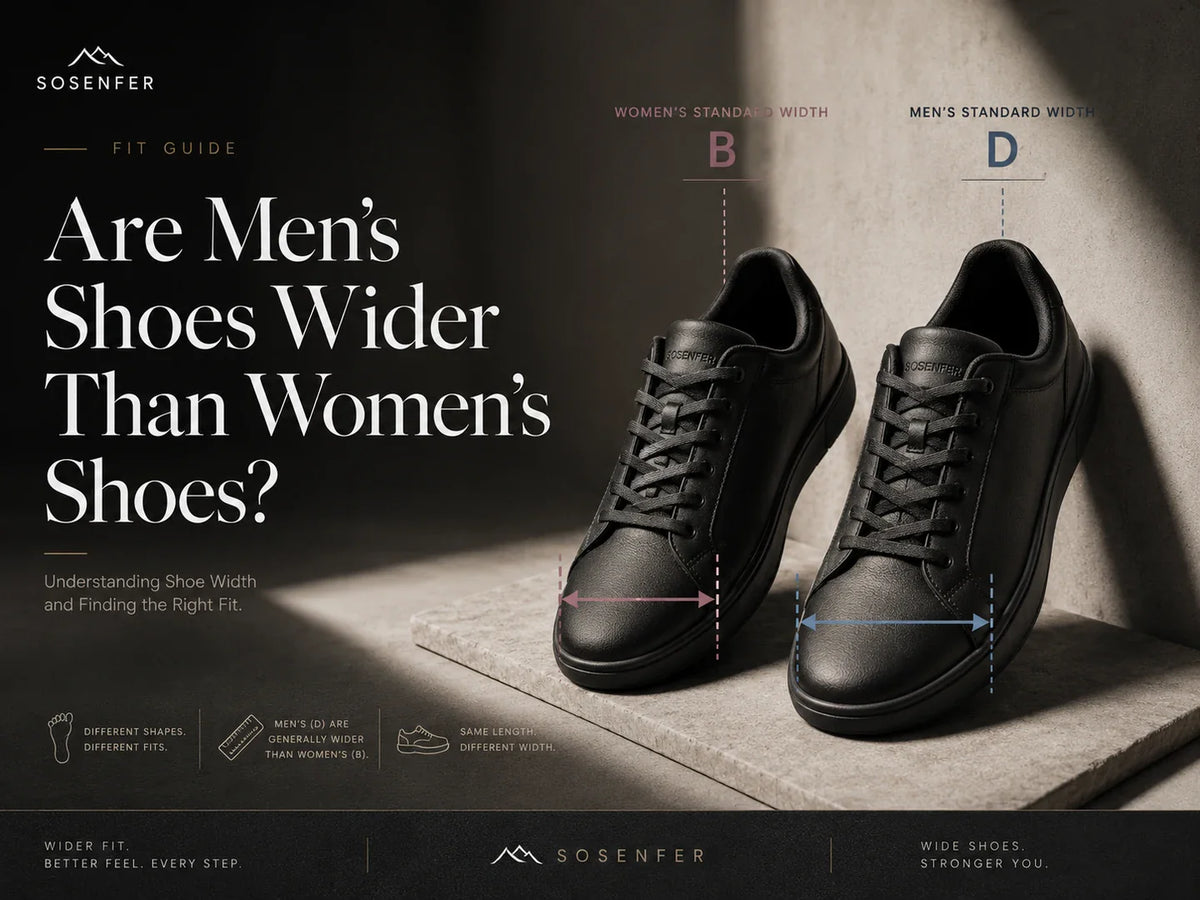
Je vindt een paar schoenen dat je mooi vindt, maar de damesversie voelt strak rond de tenen. Vervolgens probeer je de herenversie, en plotseling hebben je voeten meer ruimte.
Betekent dit dat herenschoenen altijd breder zijn dan damesschoenen?
In veel gevallen zijn herenschoenen in dezelfde algemene maatvoering breder gemaakt dan damesschoenen. Maar het echte antwoord hangt af van meer dan het label op de doos.
Standaardbreedtecategorieën, de hielvorm, het neusontwerp, de schoenconstructie en maataanduidingen van het merk kunnen allemaal invloed hebben op hoe breed een schoen daadwerkelijk aanvoelt. Als je deze verschillen begrijpt, wordt het gemakkelijker schoenen te vinden die comfortabel aanvoelen, in plaats van simpelweg de maat te kiezen die je gewoonlijk draagt.

Ja, standaard herenschoenen zijn doorgaans breder dan standaard damesschoenen.
Bij gangbare Amerikaanse schoenmaten wordt een standaardbreedte voor dames meestal aangeduid met B, terwijl een standaardbreedte voor heren meestal wordt aangeduid met D. Dit betekent dat een normale herenschoen doorgaans breder is dan een normale damesschoen, vooral bij de voorvoet en tenen.
Een damesschoen met een wijde breedte wordt ook vaak aangeduid als D, dezelfde letter die vaak wordt gebruikt voor de standaardbreedte van herenschoenen. Dat betekent echter niet dat de twee schoenen precies hetzelfde zullen passen. De algehele vorm, de hielbreedte, het wreefvolume en het ontwerp van de neus kunnen nog steeds verschillen.
| Breedtecategorie | Damesschoenen | Herenschoenen |
|---|---|---|
| Smal | AA of A | B |
| Standaard | B | D |
| Wijd | D | 2E |
| Extra wijd | 2E of breder | 4E of breder |
Breedte-aanduidingen kunnen per merk verschillen. Controleer daarom altijd de eigen maattabel van het merk voordat je bestelt. Een schoen die door het ene merk als ‘wijd’ wordt aangeduid, kan vergelijkbaar aanvoelen met een schoen met standaardbreedte van een ander merk.
Sosenfer-pasvormnotitie
Een comfortabele pasvorm hangt af van de plekken waar je voet ruimte nodig heeft. Sommige mensen hebben overal meer breedte nodig. Anderen hebben vooral meer ruimte bij de tenen nodig. Daarom kunnen schoenen met een brede neus handig zijn, zelfs als je niet overal een extra brede schoen nodig hebt.
Herenschoenen en damesschoenen worden vaak gemaakt met verschillende leestvormen. Een schoenleest is de voetvorm die wordt gebruikt om de structuur en verhoudingen van de schoen te bepalen.
Herenschoenen hebben vaak:
Damesschoenen zijn vaak ontworpen met:
Door deze verschillen kan een herenschoen je meer ruimte bij de tenen geven, maar ook extra ruimte rond de hiel creëren. Als je hiel slipt of je voet van links naar rechts schuift, kan de schoen over het geheel genomen te breed zijn, ook al voelt het teengedeelte beter aan.
Een herenschoen kan beter aanvoelen voor iemand met bredere voeten, omdat deze vaak meer ruimte biedt over de bal van de voet, bij de tenen en op de wreef.
Dit kan vooral merkbaar zijn bij:
Beschermende werk- en veiligheidsschoenen kunnen al steviger aanvoelen dan gewone sneakers. Een ruimere herenpasvorm kan soms het gevoel van druk aan de zijkanten van de voeten of rond de tenen verminderen. Meer ruimte is echter niet altijd beter. Schoenen die te breed zijn, kunnen ervoor zorgen dat de voet gaat schuiven, wat instabiliteit, hielbeweging of wrijving veroorzaakt.
Ja. Er is geen regel die zegt dat schoenen uitsluitend moeten worden gekozen op basis van de gendercategorie die op de productpagina staat.
De belangrijkste factoren zijn:
Vrouwen met bredere voeten kunnen merken dat sommige herenschoenen een comfortabelere vorm bieden. Mannen met smallere voeten geven soms de voorkeur aan de verhoudingen van bepaalde dames- of uniseksmodellen. Het belangrijkste is om maten te vergelijken en niet alleen naar genderlabels te kijken.

Voor Amerikaanse maten is een gebruikelijk uitgangspunt om ongeveer 1,5 maat van de damesmaat af te trekken.
| Amerikaanse damesmaat | Geschatte Amerikaanse herenmaat |
|---|---|
| Dames 8 | Heren 6,5 |
| Dames 9 | Heren 7,5 |
| Dames 10 | Heren 8,5 |
| Dames 11 | Heren 9,5 |
Dit is slechts een algemene omrekening. Sommige merken hanteren een verschil van één maat, terwijl andere 1,5 of zelfs twee maten gebruiken.
Europese maten zijn vaak gemakkelijker te vergelijken, omdat EU-maten over het algemeen niet zijn opgesplitst in aparte nummerreeksen voor heren en dames. Toch kunnen de vorm en breedte van de schoen verschillen, zelfs wanneer de EU-maat hetzelfde is.
Niet altijd.
Een damesschoen met breedte D en een herenschoen met breedte D kunnen allebei de letter D gebruiken, maar zijn niet automatisch identiek. De breedte wordt beïnvloed door de lengte van de schoen en de leest kan nog steeds andere verhoudingen hebben.
De herenversie kan bijvoorbeeld het volgende hebben:
Daarom moet de breedteletter worden gezien als een handige richtlijn en niet als een garantie voor een goede pasvorm.

Je schoenen zijn mogelijk te smal wanneer:
Je voeten kunnen na enkele uren lopen of staan van nature groter aanvoelen. Door schoenen later op de dag te passen, krijg je een realistischer beeld van hoe ze tijdens normaal gebruik zullen zitten.
Alle drie kunnen goede opties zijn, maar ze lossen net iets verschillende pasvormproblemen op.
| Optie | Het beste wanneer je nodig hebt | Let op |
|---|---|---|
| Brede damesschoenen | Meer ruimte bij de voorvoet met over het algemeen een smallere hiel. | Kunnen bij de tenen nog steeds taps toelopen, afhankelijk van de vorm van het merk. |
| Herenschoenen | Meer totale breedte, wreefvolume en ruimte door de hele schoen. | Kan los aanvoelen rond de hiel of middenvoet. |
| Schoenen met een brede teenbox | Meer natuurlijke ruimte voor je tenen zonder dat de hele schoen per se losser zit. | Je moet nog steeds de lengte, breedte en houvast bij de hiel controleren. |
Als je belangrijkste probleem op elkaar gedrukte tenen is, kan een schoen met een brede teenbox gerichter zijn dan simpelweg overstappen op een herenschoen. De schoenen van Sosenfer met een brede teenbox zijn gevormd met extra ruimte over de voorvoet, terwijl veel modellen rond de middenvoet en hiel stevig blijven zitten.
Sosenfer-schoenen met brede teenbox
Ontdek schoenen met extra ruimte bij de voorvoet voor wandelen, werk, reizen en lange dagen op je voeten — zonder een oversized pasvorm te kiezen alleen voor meer ruimte bij je tenen.
Bekijk schoenen met een brede teenboxEen goed passende schoen moet stevig aanvoelen zonder je voet af te knellen.
Controleer of:
Ga er niet van uit dat een schoen na het dragen aanzienlijk breder wordt. Sommige zachte materialen kunnen iets uitrekken, maar de zoolconstructie en de algehele vorm zullen waarschijnlijk niet veel veranderen.
Sosenfer biedt verschillende opties voor een brede pasvorm, omdat niet elke voet hetzelfde soort ruimte nodig heeft.
| Kies dit | Als je belangrijkste probleem is | Geschikt voor |
|---|---|---|
| Schoenen met een brede teenbox | Op elkaar gedrukte tenen, druk op de voorvoet of taps toelopende schoenen. | Wandelen, reizen, werken, dagelijkse beweging en lang staan. |
| Brede schoenen in 4E | Je hebt merkbaar meer totale breedte en volume nodig. | Extra brede voeten, een hogere wreef of een bredere pasvorm over een groter deel van de schoen. |
Als standaardschoenen alleen aan de voorkant smal aanvoelen, begin dan met schoenen met een brede teenbox. Als je vaak druk over de hele schoen voelt, is een 4E-optie mogelijk geschikter.
Herenschoenen zijn bij standaardmaten over het algemeen breder dan damesschoenen. Een gebruikelijke D-breedte voor heren is breder dan een gebruikelijke B-breedte voor dames, en herenschoenen bieden vaak meer ruimte bij de teenbox, de voorvoet en de wreef.
Toch bepaalt het label op zichzelf niet hoe de schoen past.
Een brede damesschoen, een standaard herenschoen, een unisekschoen of een schoen met een brede teenbox kan afhankelijk van het merk en ontwerp telkens anders aanvoelen. Richt je niet alleen op de vraag of een schoen als heren- of damesschoen wordt aangeduid, maar bekijk ook de afmetingen, de breedtemarkering, de vorm van de teenbox en de algehele verhoudingen.
De beste schoen is niet simpelweg de breedste. Het is de schoen die je voeten voldoende ruimte geeft en tegelijkertijd bij elke stap stevig aanvoelt. Voor veel mensen zijn Sosenfer-schoenen met een brede teenbox een praktisch startpunt.
Bij standaard Amerikaanse maten zijn herenschoenen doorgaans breder dan damesschoenen. Een gebruikelijke standaardbreedte voor dames is B, terwijl een gebruikelijke standaardbreedte voor heren D is.
Ja. Vrouwen met bredere voeten vinden sommige herenschoenen mogelijk comfortabeler, maar ze moeten letten op de lengte, de grip rond de hiel, de pasvorm rond de middenvoet en de algehele vorm. Een schoen met een brede teenbox kan ook helpen tegen knellende tenen zonder dat de hele schoen te los zit.
Bij Amerikaanse maten is een gangbaar uitgangspunt om ongeveer 1,5 maat af te trekken van een damesmaat om de herenmaat te schatten. Een damesmaat 9 komt bijvoorbeeld vaak ongeveer overeen met een herenmaat 7,5, maar de maatvoering kan per merk verschillen.
Niet altijd. Beide kunnen de letter D gebruiken, maar de leest, hielvorm, het volume en de verhoudingen kunnen verschillen. Zie breedteletters als een richtlijn, niet als een garantie.
Vaak wel. Een grotere maat kan extra lengte en meer beweging van de hiel veroorzaken. Schoenen met een brede teenbox zijn ontworpen om meer ruimte aan de voorkant van de schoen te bieden, waar de tenen vaak knel komen te zitten.
Je kunt hier Sosenfer-schoenen met een brede teenbox bekijken: Collectie schoenen met brede teenbox.
Gerelateerde links van Sosenfer:


