
Que sont les chaussures à enfiler ?
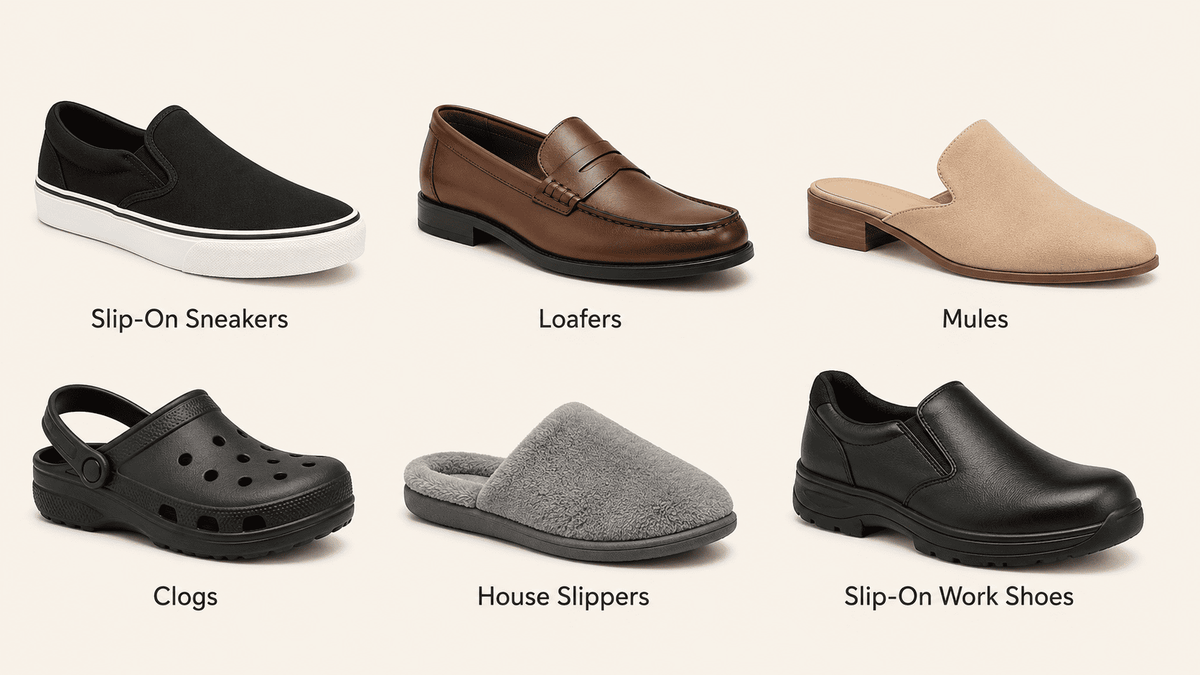
Les chaussures à enfiler sont conçues pour être mises sans nouer des lacets classiques à chaque fois.
Cette catégorie comprend les baskets décontractées, les mocassins, les mules, les sabots, les chaussures de marche, les chaussures de travail, les chaussures de sécurité, les chaussures plates et plusieurs types de chaussures faciles à enfiler.
Certains modèles utilisent des panneaux élastiques ou des tiges souples. D’autres sont dotés d’une ouverture basse, de tirettes, de bordures extensibles ou d’un talon structuré qui facilite l’enfilage.
Une bonne chaussure à enfiler doit être facile à mettre sans sembler lâche pendant la marche. La commodité compte, mais le maintien du talon, l’espace pour les orteils, le volume de la chaussure, la stabilité de la semelle et l’usage prévu sont tout aussi importants.
Ce guide explique ce que sont les chaussures à enfiler, en quoi elles diffèrent des chaussures sans les mains, quels modèles conviennent au quotidien ou au travail et comment choisir une paire qui reste bien maintenue aux pieds.
Réponse rapide
Les chaussures à enfiler sont des chaussures qui peuvent être portées sans nouer régulièrement des lacets, fermer des boucles ou régler un système de fermeture classique.
Le pied entre par une ouverture soutenue par des éléments tels que des panneaux élastiques, du tissu extensible, des bordures souples, des tirettes, des talons ouverts ou des talons structurés.
« À enfiler » décrit le style d’entrée et de fermeture. Cela ne garantit pas que la chaussure puisse être mise sans les mains, qu’elle soit large, rembourrée, antidérapante, adaptée au travail ou appropriée à la marche sur longue distance.
Dans ce guide :
Fonctionnement des chaussures à enfiler · Chaussures à enfiler ou chaussures sans les mains · Types courants · Guide des pointures · Chaussures de travail · Pieds larges · Série Sosenfer · FAQ

Les chaussures à lacets reposent sur une fermeture réglable qui permet d’ouvrir la chaussure, de faire entrer le pied, puis de le maintenir au niveau du milieu du pied.
Les chaussures à enfiler remplacent ces réglages répétés par une ouverture plus accessible et une forme conçue pour maintenir le pied une fois celui-ci enfilé.
Les structures d’entrée courantes comprennent :
La conception doit répondre à deux besoins contradictoires : l’ouverture doit s’élargir suffisamment pour permettre l’enfilage, mais la chaussure doit rester assez ajustée pour que le talon ne se soulève pas de manière répétée et que le pied ne glisse pas vers l’avant.
Les termes sont liés, mais ils ne sont pas identiques.
| Caractéristique | Chaussure à enfiler | Chaussure sans les mains |
|---|---|---|
| Nécessite de nouer les lacets à chaque fois | Généralement non | Non |
| Peut nécessiter l’aide d’une main pour enfiler le talon | Parfois | Conçue pour éviter cela lors d’un enfilage normal |
| Construction de talon classique | Flexibles, ouverts, bas ou traditionnels | Plus structuré pour aider à maintenir l’ouverture |
| Objectif principal | Enfilage et retrait simplifiés | Enfilage par simple insertion, sans se pencher ni utiliser les mains |
| Garantit un maintien sûr pendant la marche | Non | Non ; l’ajustement doit tout de même être vérifié |
Une basket classique sans lacets peut être rapide à enfiler, tout en nécessitant de tirer sur le col du talon. Une conception à enfilage mains libres est spécialement structurée pour permettre au pied d’entrer plus directement.
Aucun de ces termes ne décrit automatiquement la largeur de l’avant-pied, l’amorti de la semelle, l’adhérence de la semelle extérieure ou l’adéquation à un usage professionnel.
Distinction simple : toutes les chaussures à enfilage mains libres sont faciles à mettre, mais toutes les chaussures sans lacets ne peuvent pas être enfilées sans utiliser les mains.
Les baskets sans lacets associent une apparence sportive ou décontractée à un système d’enfilage sans lacets. Elles peuvent utiliser du tissu extensible, des empiècements élastiques, des cols flexibles ou des talons structurés.
Selon leur conception, ils peuvent convenir aux courses, aux trajets domicile-travail, aux voyages, à la marche quotidienne et aux environnements de travail décontractés.
Les mocassins sont des chaussures sans lacets fermées à l’avant et à l’arrière, généralement plus basses et d’apparence plus élégante que les chaussures de sport sans lacets.
Leur adéquation à la marche prolongée dépend de l’ajustement, de la semelle, de l’amorti, du maintien du talon et du matériau, et pas uniquement de l’appellation « mocassins ».
Les mules ont l’arrière ouvert ou partiellement ouvert. Elles sont particulièrement faciles à enfiler, mais l’absence d’une structure complète au niveau du talon peut entraîner davantage de mouvement pendant la marche.
Ils conviennent souvent mieux à une utilisation détendue et peu intense qu’aux activités nécessitant un maintien ferme du pied.
Les sabots ont généralement une tige spacieuse et une semelle relativement épaisse. Certains ont l’arrière ouvert, tandis que d’autres comprennent une bride au talon ou une partie arrière fermée.
L’adéquation au travail varie selon les performances de la semelle extérieure, les matériaux, le maintien du talon, la protection et les exigences de l’employeur.
Les chaussures sans lacets conçues pour la marche ont généralement un talon fermé, une semelle intermédiaire amortissante, un avant-pied flexible et une semelle extérieure destinée aux déplacements quotidiens répétés.
La chaussure doit néanmoins être adaptée à votre distance de marche, au type de surface, à la largeur de votre pied, à la forme de votre talon et au niveau de maintien que vous préférez.
Les chaussures de travail sans lacets associent un enfilage facile à des caractéristiques prévues pour rester debout, marcher régulièrement ou être utilisées sur le lieu de travail.
Selon le style, elles peuvent avoir une tige plus durable, une semelle stable, un avant-pied plus spacieux, des matériaux faciles d’entretien ou une semelle extérieure conçue pour le travail.
Les chaussures de sécurité sans lacets peuvent comporter une protection des orteils en acier ou en matériau composite, des composants résistants aux perforations, des tiges structurées ou d’autres éléments de protection.
La protection et la certification doivent être vérifiées pour chaque modèle. L’absence de lacets traditionnels ne détermine pas si la chaussure convient à un lieu de travail donné.
Les ballerines, les mocassins habillés, les ballerines à plateforme et les chaussures décontractées à profil bas peuvent également s’enfiler sans lacets.
Une apparence soignée ne garantit pas un confort durable. Vérifiez la forme des orteils, la structure sous le pied, le maintien du talon et la quantité de marche prévue.

Leur principal avantage ne réside pas dans une caractéristique technique unique. Il s’agit de réduire une petite tâche répétitive.
Les chaussures à enfiler peuvent être utiles lorsque vous souhaitez :
Ces avantages ne restent utiles que si la chaussure reste bien maintenue au pied. Une chaussure à enfiler trop lâche peut provoquer un soulèvement du talon, un glissement vers l’avant, une crispation des orteils, des frottements et une sensation d’instabilité à la marche.
Les chaussures à enfiler n’offrent pas la même amplitude de réglage que les chaussures classiques à lacets. La forme et le volume d’origine sont donc particulièrement importants.
Un léger mouvement peut se produire avec certains mocassins, sabots ou modèles ouverts à l’arrière, mais une chaussure fermée à l’arrière destinée à la marche ou au travail ne devrait pas se soulever excessivement à chaque pas.
Un soulèvement répété du talon peut indiquer une longueur excessive, une ouverture trop grande, un maintien insuffisant du milieu du pied ou une forme de talon qui ne correspond pas à votre pied.
Si la chaussure ne maintient pas le milieu du pied, les orteils peuvent heurter répétitivement l’avant pendant la marche ou dans les descentes.
Ne tentez pas de résoudre ce problème en choisissant une chaussure plus courte lorsque le véritable problème est un maintien insuffisant du cou-de-pied ou du talon.
Les chaussures à enfiler dépendent souvent de la tige et de la zone du cou-de-pied pour maintenir le pied.
Un pied peu volumineux peut sembler flotter, tandis qu’un cou-de-pied haut peut subir une pression sur le dessus. Une matière extensible peut aider, mais elle ne peut pas compenser une forme fondamentalement inadaptée.
La pointure indiquée peut être correcte alors que l’avant reste trop étroit.
Vérifiez si le gros orteil, le petit orteil ou les côtés de l’avant-pied appuient contre la tige. Une largeur supplémentaire à l’avant ne devrait pas obliger la chaussure entière à sembler trop grande.
Les empiècements élastiques, les bords d’ouverture et les tiges extensibles peuvent se détendre au fil des utilisations répétées.
Une chaussure qui semble déjà lâche lorsqu’elle est neuve peut devenir moins sûre à mesure que les matériaux s’assouplissent ou s’étirent.
| Ce que vous remarquez | Problème d’ajustement possible | Éléments à comparer |
|---|---|---|
| Le talon se soulève de manière visible | Chaussure trop longue, ouverture trop lâche ou forme du talon inadéquate | Longueur, structure du talon, ouverture et maintien du médio-pied |
| Les orteils touchent l’avant | Longueur insuffisante ou glissement vers l’avant | Dégagement à l’avant et maintien du pied |
| La tige comprime le cou-de-pied | Volume insuffisant de la tige | Élasticité, hauteur de l’ouverture et forme du cou-de-pied |
| Les côtés de l’avant-pied semblent comprimés | Largeur insuffisante ou boîte à orteils effilée | Catégories à coupe large ou à boîte à orteils large |
| Le pied bouge latéralement | Largeur ou volume excessif | Forme plus étroite ou fermeture plus réglable |

Aucun des deux styles d’enfilage n’est automatiquement meilleur. Le choix pratique dépend du niveau de réglage, de commodité et de maintien du pied dont vous avez besoin.
| Comparaison | Chaussures sans lacets | Chaussures à lacets |
|---|---|---|
| Vitesse d’enfilage et de retrait | Généralement plus rapide | Généralement plus lente |
| Réglage | Limitée par la forme intégrée | Généralement plus importante |
| Adaptation aux variations du volume du pied | Dépend de l’élasticité et de la structure de la tige | Peuvent souvent être desserrés ou resserrés |
| Lacets lâches | Absents des chaussures sans lacets classiques | Doivent être noués et ajustés |
| Conviennent surtout aux | Routines quotidiennes privilégiant la commodité | Activités nécessitant un maintien plus précis |
Une chaussure sans lacets correctement conçue peut offrir un bon maintien sans lacets. Toutefois, les personnes ayant besoin d’un ajustement important au niveau du cou-de-pied ou d’un maintien très ferme pour des mouvements exigeants peuvent trouver une chaussure à lacets ou un système réglable plus adapté.
Elles peuvent convenir lorsque leur conception est adaptée au lieu de travail.
Une chaussure décontractée basique sans lacets n’est pas automatiquement une chaussure de travail, et une chaussure de travail sans lacets n’est pas automatiquement une chaussure de sécurité certifiée.
Selon le travail, examinez :
La facilité d’enfilage ne constitue qu’un aspect de l’adéquation au travail. Vérifiez toutes les informations de protection et de performance du modèle concerné avant de commander.
Consigne de sécurité : « sans lacets », « chaussure de travail », « adhérence » et « embout de sécurité » désignent des caractéristiques différentes. Ne considérez pas ces termes comme interchangeables.
Elles peuvent l’être, mais uniquement lorsque la chaussure est conçue avec une largeur et un volume adaptés.
Une tige extensible peut faciliter l’enfilage sans offrir suffisamment d’espace utilisable dans la semelle extérieure, la semelle intérieure ou la structure de la boîte à orteils.
Pour les pieds larges, vérifiez :
Une boîte à orteils large offre davantage d’espace à l’avant. Une coupe 4E ou extra-large peut offrir plus de largeur sur une plus grande partie de la chaussure.
Ces termes sont liés, mais ne doivent pas être considérés comme identiques. Choisissez selon la zone où votre pied se sent à l’étroit.

Un autre style de fermeture peut être plus adapté lorsque :
Le confort ne doit pas primer sur la coupe, la stabilité, la protection ou les exigences de l’activité.
Sosenfer organise les chaussures faciles à enfiler selon le profil du porteur, la coupe et les exigences professionnelles.
Utilisez la page de la série qui correspond le mieux à l’usage prévu. Les caractéristiques varient au sein de chaque collection.
Quotidien et décontracté
Comparez les baskets, chaussures plates, mules, chaussures de marche, chaussures inspirées du style pieds nus et chaussures décontractées à enfiler pour femmes.
Découvrez les chaussures pour femmes à enfilerUsage pendant la journée de travail
Comparez des chaussures de travail faciles à enfiler, conçues pour rester debout, marcher et accomplir les tâches quotidiennes.
Découvrez les chaussures de travail à enfilerVêtements de travail de protection
Découvrez des chaussures de sécurité faciles à enfiler, avec différents embouts de protection, ajustements, semelles extérieures et systèmes de réglage.
Découvrez les chaussures de sécurité à enfiler avec embout de protectionPlus d’espace à l’avant-pied
Comparez les modèles de marche, décontractés, de travail, de sécurité, inspirés du pied nu et faciles à enfiler, dotés d’une forme avant plus accommodante.
Découvrez les chaussures à boîte à orteils largeCoupe extra-large
Comparez une sélection de chaussures 4E et extra-larges pour les personnes qui ont besoin d’une largeur totale supérieure à celle d’un ajustement standard classique.
Découvrez les chaussures extra-larges 4ERemarque sur la série : Le système d’enfilage, la forme de la boîte à orteils, la largeur totale, la semelle intérieure, l’amorti, la semelle extérieure, les éléments de protection et l’usage prévu varient selon les modèles. Consultez les informations propres à chaque produit avant de commander.
Enfilage facile, ajustement étudié
Découvrez des chaussures décontractées, à coupe large, de travail, de sécurité, pour femmes et extra-larges, faciles à enfiler, sans supposer qu’une même structure convient à toutes les habitudes.
Découvrez toutes les chaussures SosenferLes chaussures à enfiler sont des chaussures que l’on peut mettre sans nouer à répétition des lacets classiques ni fermer une fermeture traditionnelle. Elles utilisent une ouverture accessible, des matières extensibles, des empiècements élastiques, des tirettes, un contrefort ouvert ou des talons structurés.
Non. Certaines chaussures à enfiler nécessitent tout de même de tirer sur le talon ou d’utiliser une main pour les chausser. Les chaussures à enfilage mains libres sont spécialement conçues pour permettre de les chausser en entrant le pied sans utiliser les mains lors d’un port normal.
Oui. Les mocassins sont un type de chaussures à enfiler. Les autres types comprennent les baskets à enfiler, les mules, les sabots, les chaussures plates, les chaussures de marche, les chaussures de travail et les chaussures de sécurité.
Elles peuvent l’être si elles offrent une longueur adaptée, suffisamment d’espace pour les orteils, un bon maintien du talon et du médio-pied, un amorti, une flexibilité et une semelle extérieure adaptées à la surface de marche.
Cela dépend de la conception, du sol, de la routine de travail, de l’ajustement, de l’amorti, de la stabilité, de l’état de la chaussure et de la personne qui la porte. Le simple fait qu’une chaussure s’enfile facilement ne la rend pas adaptée aux longues journées de travail.
Oui. Certains modèles à enfiler comprennent des embouts de protection en acier ou en matériau composite ainsi que d’autres éléments de sécurité. Vérifiez les caractéristiques du modèle concerné et les exigences applicables sur le lieu de travail.
Non. La conception de la semelle extérieure et les performances testées varient selon les modèles. Consultez les informations sur le produit et choisissez une semelle extérieure adaptée à la surface réelle du lieu de travail.
Une paire à tige fermée correctement ajustée devrait rester raisonnablement bien en place pendant l’activité prévue. Un soulèvement excessif du talon ou un glissement vers l’avant indique que la taille, le volume, l’ouverture ou la forme de la chaussure peut ne pas convenir.
Elles peuvent sembler bien maintenues autour de l'ouverture, mais elles ne doivent pas exercer de pression douloureuse, provoquer d'engourdissement ou comprimer fortement le cou-de-pied ni serrer les orteils.
Les matières élastiques, tricotées, textiles et souples peuvent s'assouplir ou s'étirer à l'usage. L'ampleur de cette évolution dépend du matériau et de la construction. Une chaussure déjà ample à l'état neuf peut devenir moins bien maintenue.
Elles peuvent convenir si la base de la chaussure, la boîte à orteils et le volume intérieur sont suffisamment larges. Une tige extensible à elle seule ne garantit pas une coupe large.
Une boîte à orteils large désigne principalement la forme de l'avant de la chaussure et l'espace utilisable pour les orteils. La mention 4E désigne généralement une catégorie de largeur extra-large, bien que les mesures varient selon la marque et le modèle.
Les chaussures à enfiler offrent davantage de praticité, tandis que les chaussures à lacets permettent généralement un ajustement plus précis. Le meilleur choix dépend de la forme de votre pied, de votre activité, de vos exigences professionnelles et de votre préférence quant à la méthode d'enfilage.
Utilisez uniquement des chaussures spécialement conçues pour l'activité concernée. Une chaussure à enfiler décontractée ou de marche classique peut ne pas offrir le maintien, l'amorti, la durabilité ou la conception de semelle extérieure nécessaires à la course.
Les signes avant-coureurs comprennent un soulèvement répété du talon, des mouvements latéraux, un glissement vers l'avant, des orteils crispés, des frottements ou une instabilité dans les virages.
Les signes possibles comprennent des orteils à l'étroit, une pression latérale, un engourdissement, une déformation de la tige, des marques rouges, une douleur sur le cou-de-pied ou des difficultés à insérer le pied malgré une longueur de chaussure correcte.
Les chaussures à enfiler se définissent par un enfilage simplifié, et non par une forme, un matériau ou un niveau de performance précis.
Cette catégorie comprend les baskets décontractées, les mocassins, les mules, les chaussures plates, les chaussures de marche, les chaussures de travail et les chaussures de sécurité. Certaines peuvent être enfilées sans les mains, tandis que d'autres nécessitent toujours une languette de tirage ou l'aide de la main au niveau du talon.
La paire adaptée doit correspondre à l'utilisation prévue et rester bien maintenue au niveau du talon et du médio-pied, tout en offrant une longueur, un espace pour les orteils, un volume adapté au cou-de-pied, un amorti et des performances de semelle extérieure appropriés.
Sosenfer propose plusieurs séries à enfiler et faciles à chausser, notamment des modèles décontractés, à coupe large, extra-larges, de travail, pour femmes et de sécurité. Comparez d'abord les séries pertinentes, puis consultez l'ajustement et les caractéristiques du modèle concerné avant de commander.
Remarque sur l'ajustement et le produit : Le système d'enfilage, la largeur, la forme de la boîte à orteils, l'amorti, la semelle extérieure, la protection, la certification et l'utilisation prévue varient selon le modèle. Consultez les informations détaillées sur le produit et le guide des tailles avant de commander.


